Skip to content
StewartGarage Doors

Services

Springs, openers, cables, tracks, panels

Six repairs cover almost every residential garage door call we take in Santa Rosa County. Here is what each one actually involves, and what you would have noticed before you picked up the phone.

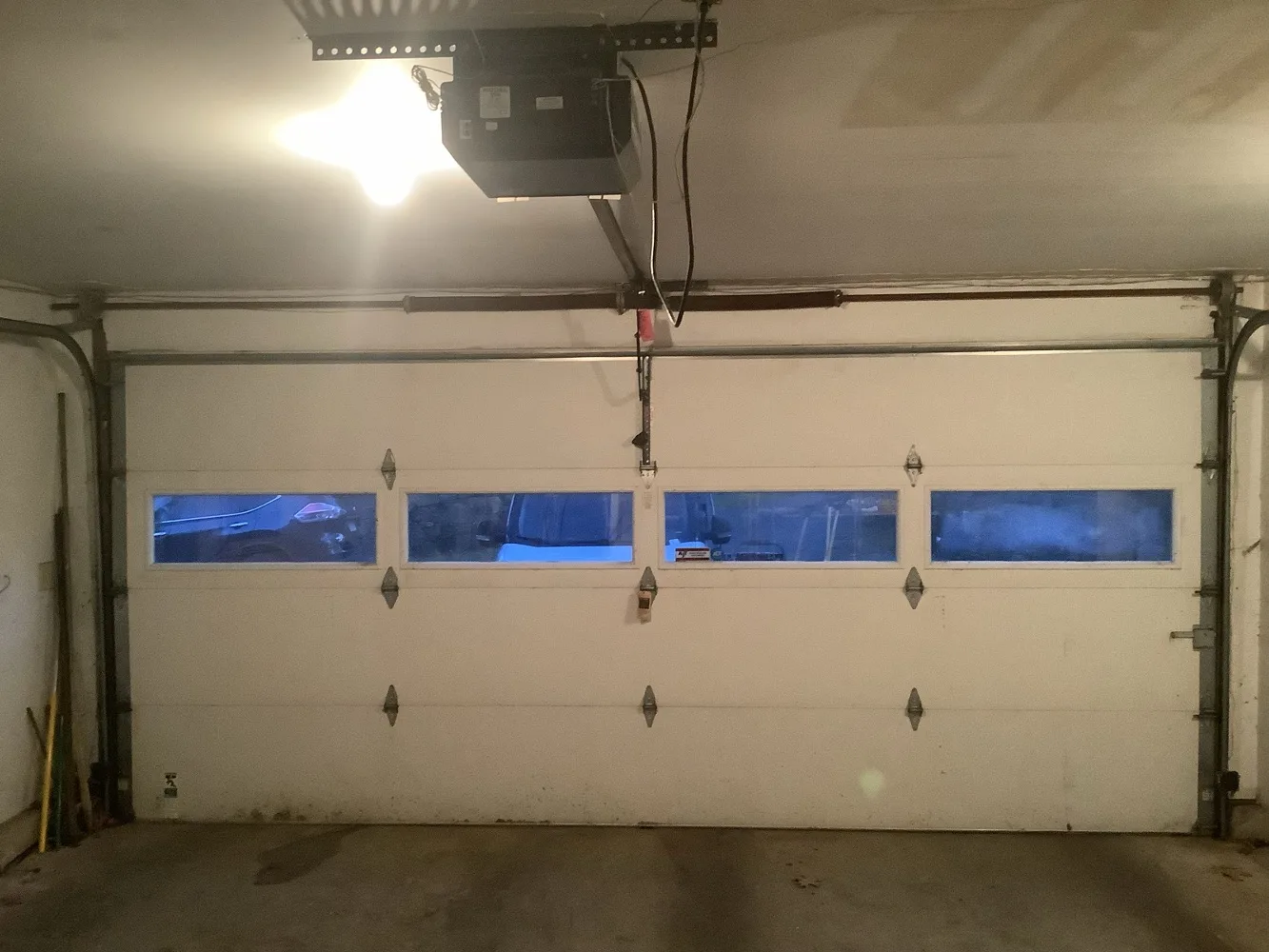
Closed white double garage door seen from inside, a row of four windows across the middle section and a lit chain-drive opener on the ceiling above the header

Before you read on

Most doors fail in one of six ways

A garage door is a counterbalanced mechanism: a wound spring holds the weight, cables carry it, tracks guide it, and the opener does nothing more than push and pull an already-balanced door the last few inches. When something goes wrong, it is almost always one of those four systems, and the symptom tells you which. Below, each repair is set out with the symptoms first — because that is the part you can see from the driveway.

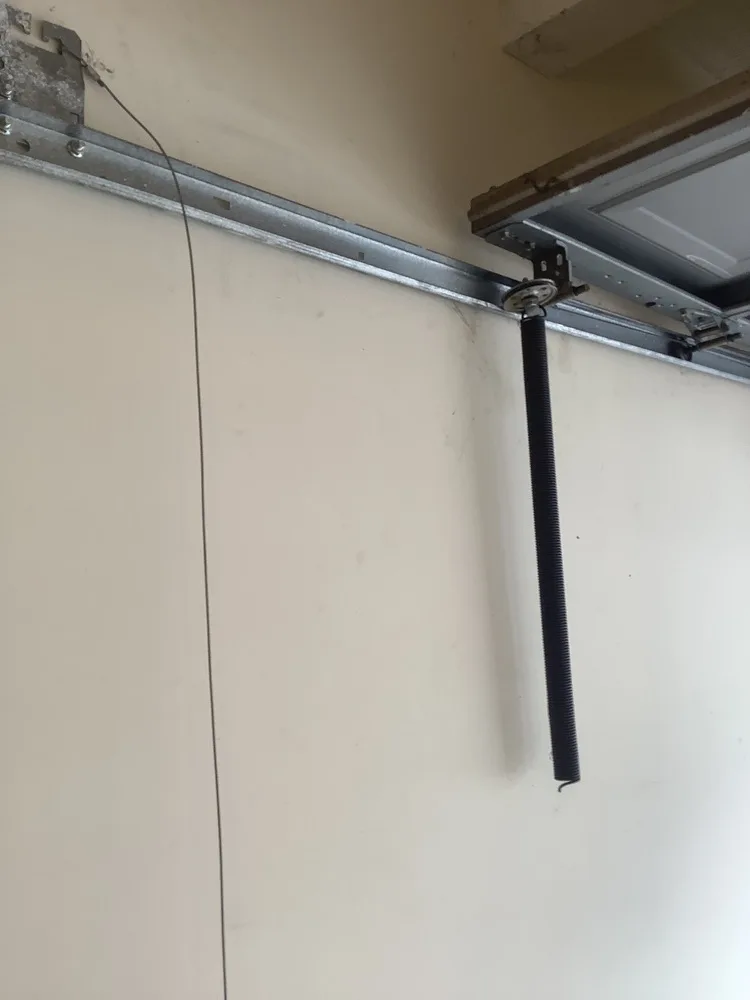
Broken extension spring hanging straight down loose from its track bracket beside a garage door, with the safety cable dangling slack alongside it

01

Torsion and extension spring replacement

A torsion spring counterbalances the whole weight of the door. When it snaps, the opener is suddenly asked to lift 150 to 250 pounds it was never rated for, and it will either stall, grind, or burn out its gears trying. The door is not broken; the thing holding its weight is gone.

We measure the wire size, inside diameter and wound length of the existing spring rather than guessing from the door size, wind the replacement to the correct turns for the door height, and then balance the door by hand at knee, waist and shoulder height. If a door does not hold where you leave it, the spring is wrong, and we adjust before we pack up. On paired springs we replace both, because the surviving one has the same cycle count as the one that just failed.

Older single doors around Milton often use extension springs stretched along the horizontal tracks instead, and those fail differently — the spring lets go and whips, which is exactly what the safety cable running through it exists to stop. If yours has no safety cable, we fit one as part of the job rather than leaving a loaded spring with nothing to catch it.

What you would notice

  • A bang like a gunshot from the garage, then a door that will not lift
  • A clean gap in the coil above the door, or a spring hanging loose beside a track
  • The opener straining, humming, or reversing a foot off the floor
  • A door that feels like it weighs two hundred pounds by hand
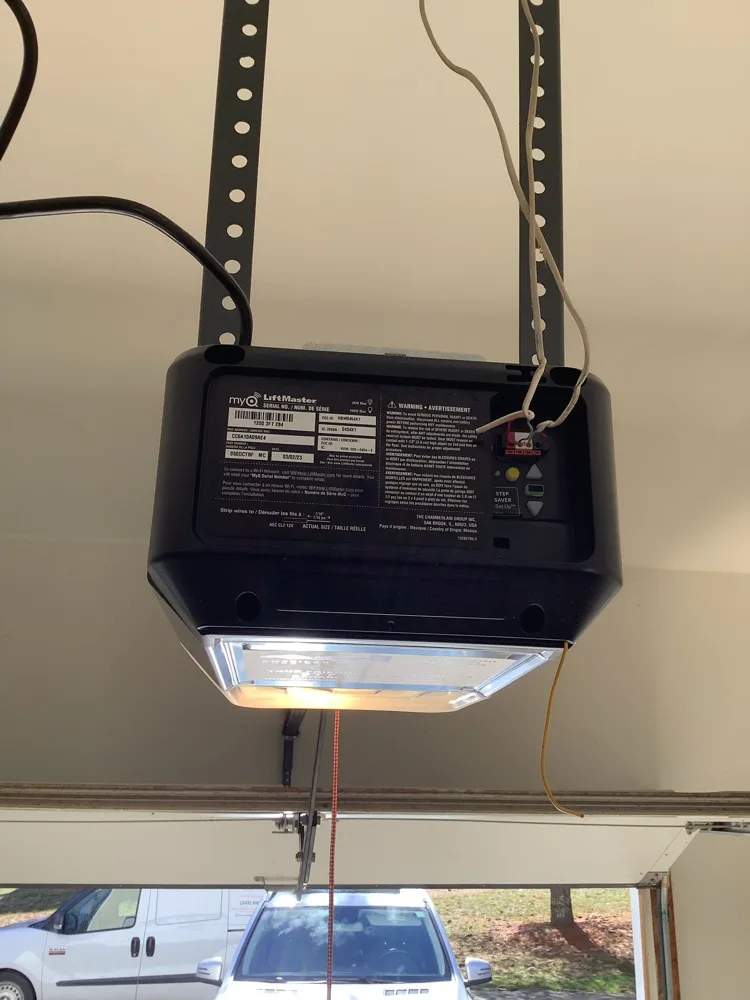
LiftMaster garage door opener head suspended from the ceiling on punched steel hangers, its rating label and lit lens facing down, with the open door and a green lawn beyond

02

Opener repair and installation

Half the openers we are called out to replace do not need replacing. A stripped nylon drive gear, a misaligned photo-eye, a travel limit that has drifted, or a logic board that has taken a hit from a Gulf Coast lightning storm are all repairs, not replacements, and we will tell you which one you are looking at before you spend anything.

When a unit genuinely is finished, we set the replacement up completely: rail assembled to the correct length for your headroom, travel and force limits set and tested against a solid object, photo-eyes aligned and confirmed, and every remote and keypad you own programmed and handed back working. We fit the drive type that suits the space, and in an attached garage under a bedroom that usually means a belt.

What you would notice

  • The motor runs but the door does not move
  • The door reverses partway down and the opener light flashes
  • The remote works from inside the garage but nowhere else
  • A grinding noise from the motor head, and plastic shavings on the floor
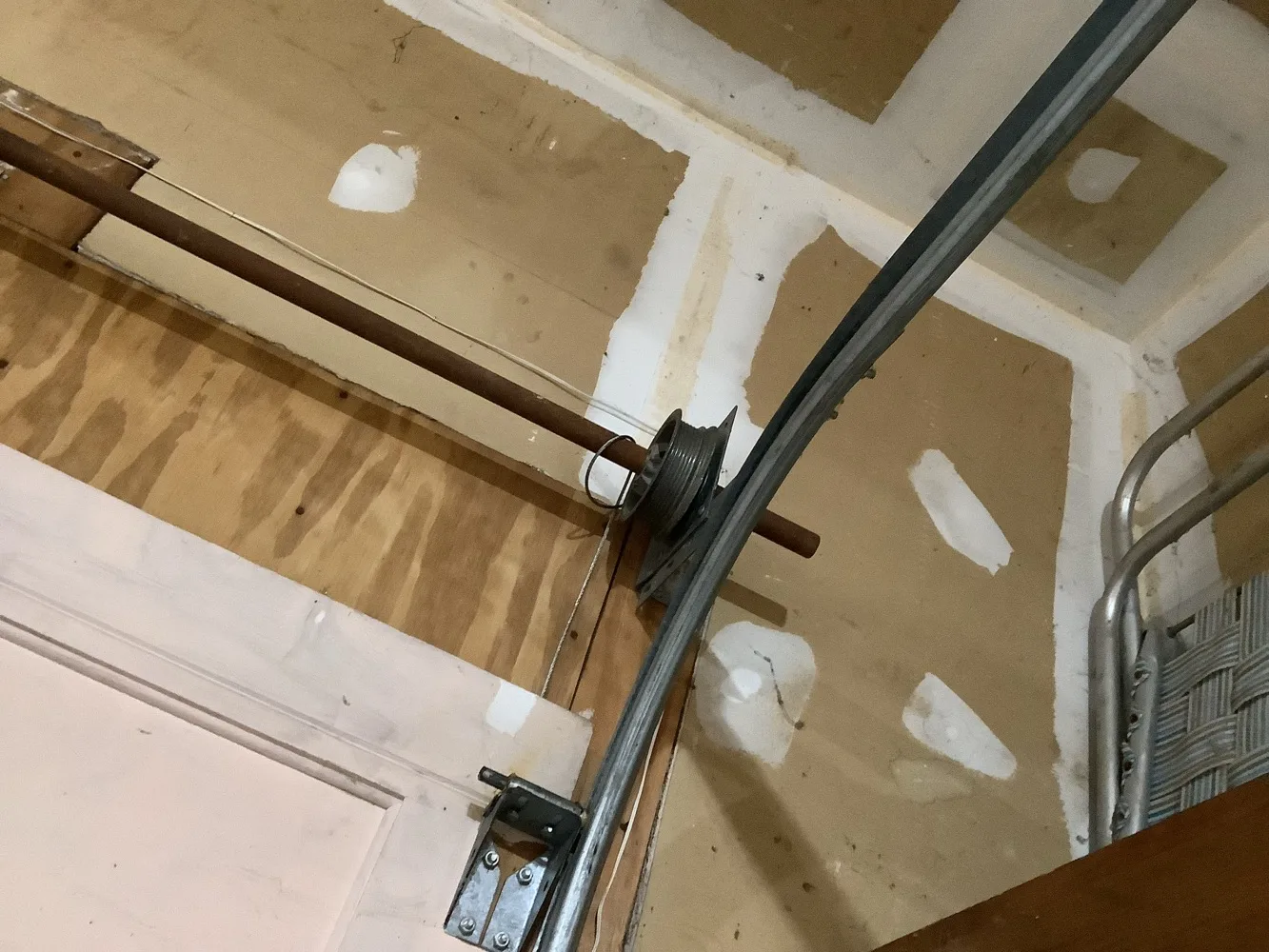
Cable drum on the end of a torsion shaft at the point where the vertical track curves into the horizontal, with the lift cable wound onto the grooved drum

03

Cable and drum repair

Lift cables carry the door on either side and wind onto a drum at each end of the torsion shaft. Salt-carrying air off the Sound and standing damp in an unheated garage both eat cable from the bottom bracket upward, so the failure almost always starts where you cannot see it, an inch above the floor.

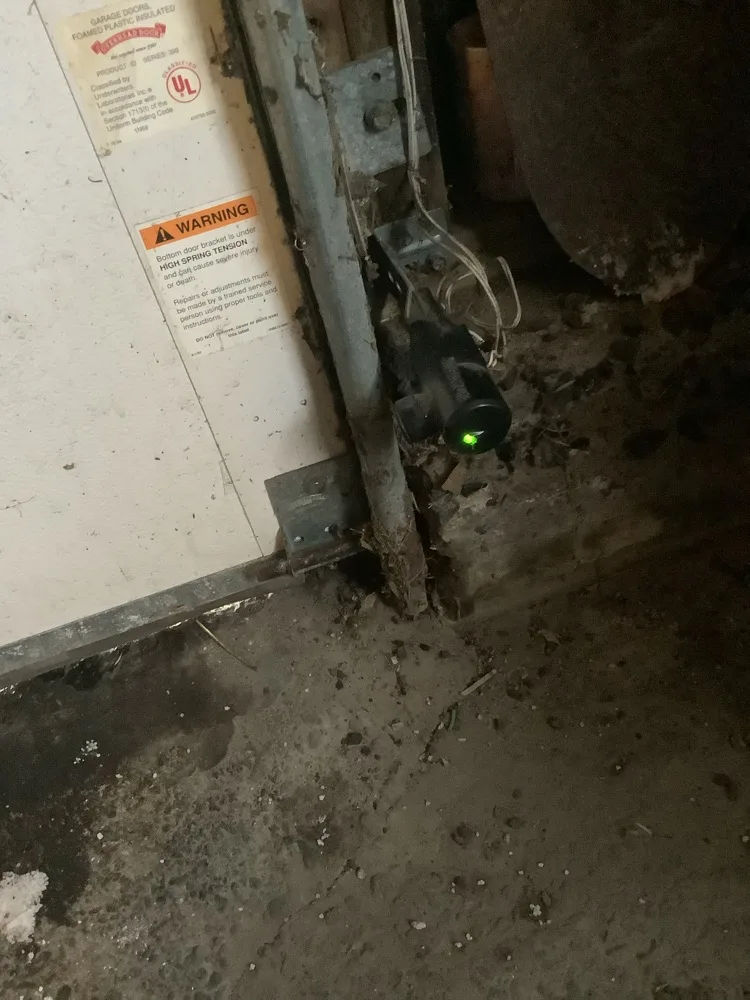
We replace cables in pairs, set both drums to the same seating on the shaft so the door rises level, and check the bottom brackets while the tension is off. Those brackets are under full spring load whenever the door is down, which is exactly why they are not a homeowner job. We also look at what cut the cable in the first place, because a sharp drum flange or a bent track will do it again in six months.

What you would notice

  • One side of the door hangs several inches lower than the other
  • A steel cable hanging loose and coiled beside the track
  • The door jammed at an angle, wedged in the opening
  • Rust-coloured strands showing where the cable meets the bottom bracket
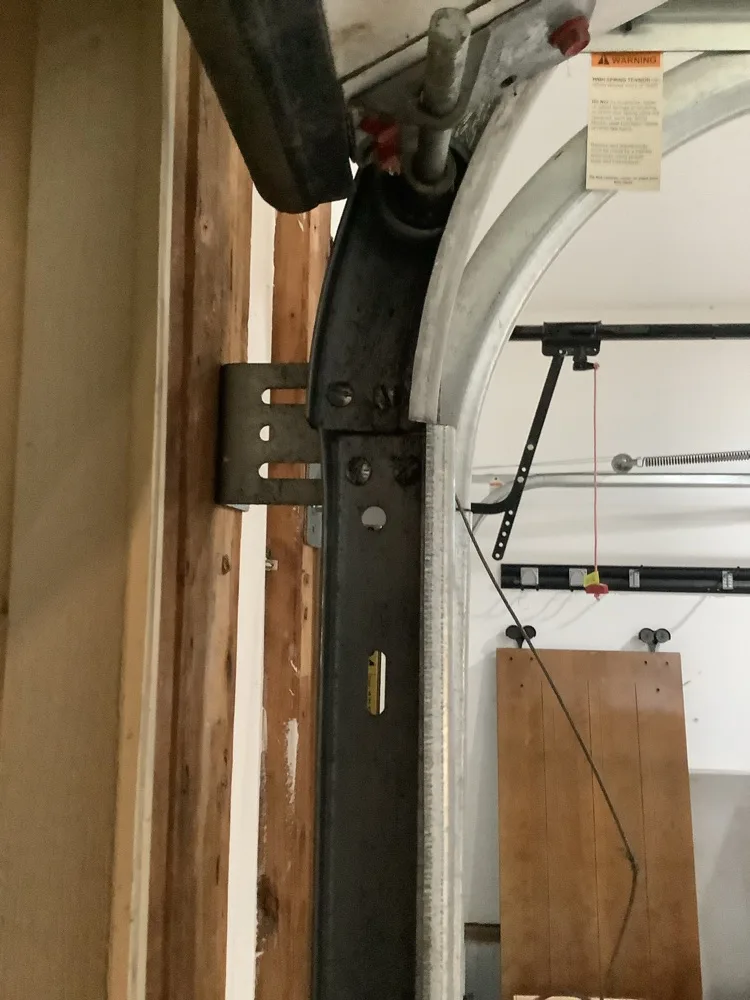
Vertical garage door track curving into the horizontal at the jamb, bolted to a timber frame through a slotted bracket, with a printed high spring tension warning label above it

04

Off-track door realignment

A door comes off its track for a reason: something hit it, a cable let go, or the brackets holding the track have worked loose from the jamb over a decade of vibration. Forcing it back on and calling it done means it comes off again, usually with a bent section this time.

We take the tension off, walk the rollers back into the track, then straighten or replace the bent track section, re-anchor the brackets into sound timber, and reset the vertical tracks to the correct spacing and plumb so the rollers are neither pinched nor loose. Then we run the door a dozen cycles and watch it, which is the only honest way to know it is fixed.

What you would notice

  • Rollers sitting outside the track, or a section bowed into the garage
  • The door binding and scraping partway up
  • Daylight down one side of a door you know used to seal
  • A track that has visibly pulled away from the jamb
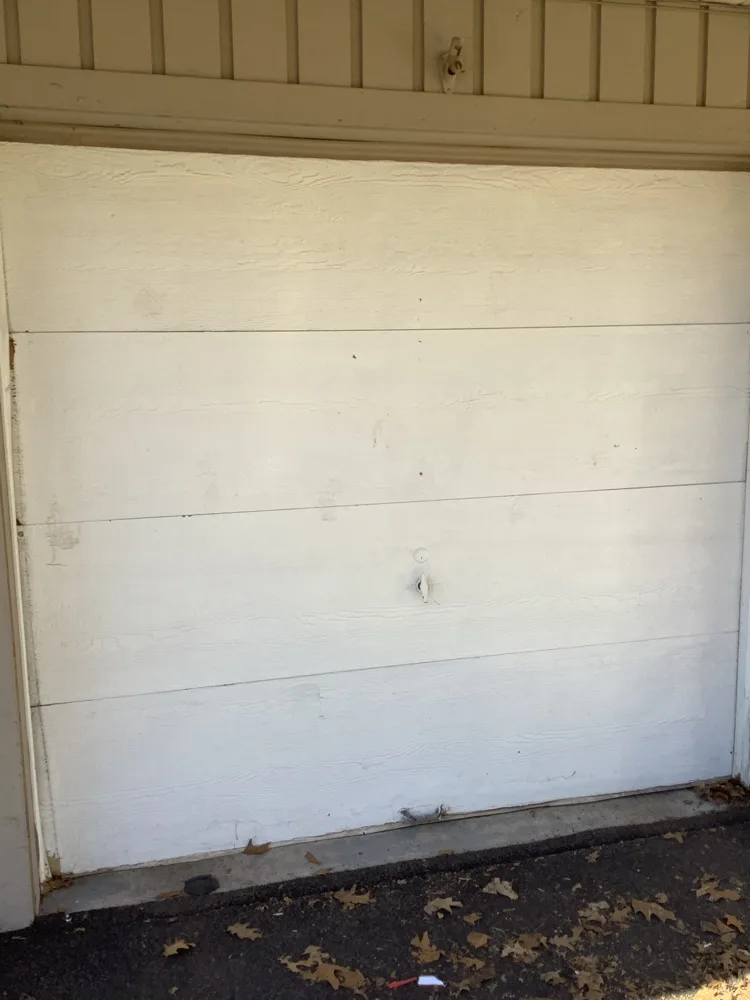
Weathered white woodgrain garage door closed in its opening under a timber soffit, fallen oak leaves scattered across the asphalt in front of it

05

Panel and section replacement

If the rest of the door is sound, a single crushed section can often be swapped rather than the whole thing, which is a substantially smaller job. Whether that is possible comes down to whether the manufacturer and profile are still available, and we check that before quoting rather than after.

When a door is beyond section work, or the bottom rail has gone soft in Florida humidity, we go through the replacement options honestly: steel gauge, insulation value for a garage that shares a wall with living space, wind rating for our part of the coast, and glazing. Then we fit it, set the new spring to the new door weight, and take the old door away.

What you would notice

  • A bottom section creased or split after a reversing car
  • Delaminated or rotted timber along the bottom rail
  • A hinge that has torn out of the panel skin
  • A door that looks tired against a house you have just repainted
Bottom corner of a garage door at floor level, its bottom bracket carrying a high spring tension warning label beside a photo-eye sensor glowing green on the jamb

06

Routine tune-ups and safety checks

A garage door on a family home cycles roughly a thousand times a year. Every one of those cycles works the hinges, the rollers, the spring and the fixings loose a fraction. A tune-up is unglamorous and it is the cheapest thing on this page.

We balance the door and adjust the spring if it has drifted, tighten every hinge, bracket and lag bolt, replace worn rollers, lubricate the springs, bearings and hinges with the right product rather than the wrong one, align and test the photo-eyes, and run the force reversal test against a solid object at the floor. You get told what we found and what will need doing next year, not a sales pitch.

What you would notice

  • The door has got noisier over the last few months
  • It shudders or hesitates at the same point every time
  • You cannot remember the last time anything was tightened
  • The reverse test with a length of timber does not stop the door

Questions

Asked on the phone most weeks

If yours is not here, it is a fair question and worth a call rather than a search.

My spring broke. Can I still get the door open?

You can, but do it carefully and only if you need the car out. Pull the emergency release cord with the door fully down, never while it is partly raised, then lift with both hands and get help — with the spring gone you are lifting the true weight of the door, which on a double is often over two hundred pounds. Prop it, do not trust it to stay up, and do not run the opener again until it is repaired.

How long does a spring replacement take?

A standard torsion spring change on a residential door is usually done inside an hour and a half once we are on site, including winding, balancing and running the door to confirm it holds at every height. Doors with an unusual spring size, a seized shaft or a corroded centre bearing take longer, and we will say so before we start rather than after.

Do you charge to come out and look?

We give you the price for the repair before any work begins, and you decide from there. Call (850) 850-3307 and tell us what the door is doing — very often we can narrow it down over the phone, which means we arrive with the right spring or the right gear kit on the van instead of making a second trip.

Which areas do you cover?

Milton, Pace and Bagdad, and out along the corridor between Milton and Pensacola, across Santa Rosa County. If you are not sure whether you are inside that, call and ask — it is a short conversation and we would rather tell you honestly than have you wait for someone who is not coming.

Does the salt air really matter this close to the coast?

It does. Salt-carrying humidity accelerates corrosion on lift cables, hinges, rollers, track fixings and the bottom brackets, and it works from the floor up where nobody looks. It is the main reason a door in Santa Rosa County needs its hardware checked more often than the same door two hundred miles inland, and the main reason we replace cables in pairs.

Can you work on my door if it was not installed by you?

Yes. Most of the doors we service were fitted by somebody else, often years ago by whoever built the house. We work on the common residential brands and hardware, and where a part has been discontinued we will tell you what the equivalent is and what it means for the rest of the door.

Book the work

One call and we bring the right part

Describe the symptom and we will usually know the fault before we set off, which is the difference between a same-visit fix and a second trip. (850) 850-3307, seven days.

Call (850) 850-3307